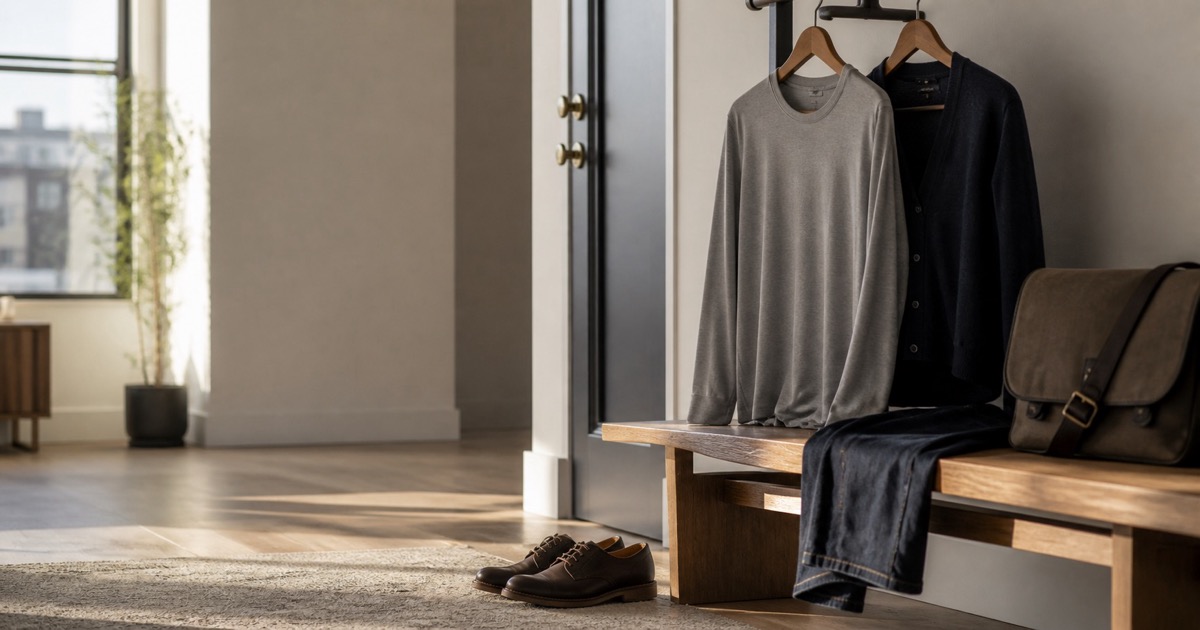
Late summer creates one of the hardest commute wardrobes because the day asks for two different outfits. The morning can feel cool enough for sleeves and a soft layer, while the afternoon can make the same outfit feel too heavy by the time the reader walks home, stops for errands, or sits near a sunny office window.
The answer is not a larger closet or a forecast-specific outfit for every day. A better commute wardrobe is a small rotation of pieces that can move through changing temperature without looking improvised. The base layer should stand on its own, the cardigan should be easy to remove, the jeans or trousers should not fight the shoes, and the bag should carry the day's extras without turning the outfit into travel gear.
This guide compares categories rather than promising universal comfort, durability, or weather performance. Climate, office dress code, transit time, and personal fit preferences all change the best answer. Use it as a decision path for building a low-drama workday rotation from practical pieces.
Quick Answer
Start with one long sleeve tee that looks finished without the cardigan, add one lightweight cardigan that can sit in the bag or on the chair, then choose denim and shoes together so the lower half of the outfit feels deliberate. A messenger bag earns its place when it carries the removed layer, laptop, charger, and small daily items without forcing a second tote.
The most reliable late-summer formula is base layer, removable knit, clean jeans or soft trousers, work-appropriate shoes, and a compact work bag. Choose neutral colors first, then add interest through texture or a single deeper shade. That keeps the outfit readable in the morning and still polished when the cardigan comes off later.
Shop the Edit
Elite Fashion may earn a commission from qualifying purchases made through shopping links on this page. Links are chosen for editorial fit and practical relevance to the article topic.
Build the Outfit From the Base Layer
The long sleeve tee is the anchor because it may be the only visible top by lunch. Compare neckline, sleeve fit, opacity, and whether the hem can be tucked, half-tucked, or left loose under a cardigan. A shirt that only works when hidden under a knit is not enough for a day with a warm afternoon.
Fabric weight matters, but it should be judged through the full workday. Too thin can feel underdressed under office lighting; too heavy can make the cardigan unnecessary before the commute is finished. Look for a base that can move between transit, desk, elevator, and lunch without needing a complete reset.
Use the Cardigan as a Tool, Not a Costume
A cardigan works best when it has a clear job: morning warmth, office air conditioning, or a softer alternative to a blazer. Compare length, button behavior, pocket placement, and shoulder shape before focusing on color. If the knit pulls at the sleeve or collapses around the bag strap, it may look tired before the day begins.
The cardigan should also have a place when removed. If it cannot fold into the messenger bag, rest neatly on the chair, or sit over the arm without attracting lint, it may create more friction than it solves. Late-summer layers succeed when they are easy to leave and easy to put back on.
Choose Denim With the Shoe in Mind
Jeans can work for many casual offices when the wash, rise, and leg shape match the rest of the outfit. A clean straight or relaxed shape often balances a cardigan better than a pair chosen only for weekend wear. The key is whether the denim supports the shoe and bag rather than making them look like afterthoughts.
For readers who wear men's denim, compare inseam, hem break, pocket shape, and whether the wash feels too rugged for the office. For readers who prefer women's long sleeve tops and cardigans, denim still needs the same practical review: waist fit while seated, shoe pairing, and whether the top layer can sit smoothly over the waistband.
Let Shoes Decide the Tone
Work shoes carry the outfit's tone more than most readers expect. A clean flat, loafer, minimal sneaker, or low-profile lace-up can make the same tee and cardigan feel office-ready or weekend casual. Compare sole thickness, toe shape, color, and whether the shoe still looks right when the cardigan is removed.
Avoid treating a shoe listing as a comfort guarantee. Retailer pages can help with size range, material, return terms, and style details, but fit is personal. The practical question is whether the shoe belongs with the commute route, the workplace, and the denim or trouser shape already in rotation.
Make the Messenger Bag Carry the Temperature Shift
The bag is where late-summer commuting becomes practical. It may need to hold the cardigan, sunglasses, a compact umbrella, a laptop, a charger, and a small personal kit. Compare strap width, laptop sleeve, closure, pocket logic, and whether the bag keeps its shape when a layer is added.
A messenger bag can look polished with denim and knitwear when the outfit is intentionally quiet. If the bag is too technical, the clothing may look too soft; if the bag is too delicate, the workday can outgrow it. The right middle point is a bag that supports the outfit and the schedule at the same time.
Plan a Three-Day Rotation
A small rotation helps readers avoid overbuying. One base tee can pair with the cardigan and dark denim for a meeting-light day. The same cardigan can move over a second base with a different neckline for a lunch plan. A darker jean or trouser can carry a desk-to-dinner version when the shoes and bag stay polished.
Write the rotation around calendar pressure. A presentation day may need the cleanest shoe and darkest denim. A long transit day may need the easiest bag. A work-from-cafe day may let the cardigan be softer and less formal. The pieces do not need to be dramatic; they need to repeat without looking exactly the same.
Check the Purchase Before Checkout
Before buying, confirm fabric, size guide, measurements, color, return terms, care instructions, and current availability on the retailer page. For jeans, check rise and inseam; for cardigans, check length and closure; for bags, check laptop dimensions and strap drop.
The best late-summer commute wardrobe feels useful because it reduces decisions. If a piece only works with one outfit, one forecast, or one office mood, it may be less useful than a quieter item that repeats. Choose the piece that makes Monday easier, then let style come from proportion and care.
Comparison Points
| Piece | What to compare |
|---|---|
| Long sleeve tee | Compare neckline, opacity, sleeve shape, and whether it can stand alone when the cardigan comes off. |
| Cardigan | Compare knit weight, closure, shoulder fit, folding behavior, and how it looks on the chair or in the bag. |
| Jeans | Compare rise, wash, leg shape, inseam, and how the hem works with the chosen office shoe. |
| Work shoes | Compare toe shape, sole profile, return terms, and whether the style suits the commute and office setting. |
| Messenger bag | Compare laptop fit, strap behavior, pockets, closure, and whether it can hold a removed layer. |
Use Cases
Transit plus cool office
Keep the cardigan reachable and choose a base top that still looks complete under bright indoor light.
Walkable lunch day
Use cleaner shoes and a bag that can carry the knit when the afternoon gets warmer.
Casual meeting day
Let dark denim, a quiet cardigan, and a structured messenger bag make the outfit feel intentional.
Before You Buy
Use retailer pages to confirm sizing, dimensions, materials, care instructions, color options, delivery timing, and return terms. The best choice is the one that fits the real routine and the real storage space, not the one that looks most complete in isolation.
After the first week of use, notice what was reached for, what stayed in the drawer, and what made cleanup harder. That small review is often more useful than adding another product before the routine has proved itself.
Browse Category Hubs
Use these broader category hubs after the article-specific product options. Narrow by size, material, format, care needs, delivery options, and the space available at home or work.
FAQ
What should I wear for a cool morning and warm afternoon commute?
Start with a finished long sleeve base, add a removable cardigan, then choose shoes and a bag that keep the outfit polished after the layer comes off.
Can jeans work for a late-summer office commute?
They can when the wash, fit, shoe, and bag are clean enough for the workplace and the day's calendar.
How many pieces should a commute rotation include?
Many readers can start with two base tops, one cardigan, one clean denim or trouser option, one practical shoe, and one work bag.